 Online Compass
Check what the page is reporting
Start the device compass and read its status, north reference and accuracy. No heading, relative rotation and low reported accuracy are different problems. Calibration cannot supply a north reference that the browser does not expose.
If permission was denied, deal with that first. If a reading is stale, wait for a fresh report. A dial that stopped changing while the tab was hidden is not evidence that the phone is pointing in a fixed direction.
Move away from interference
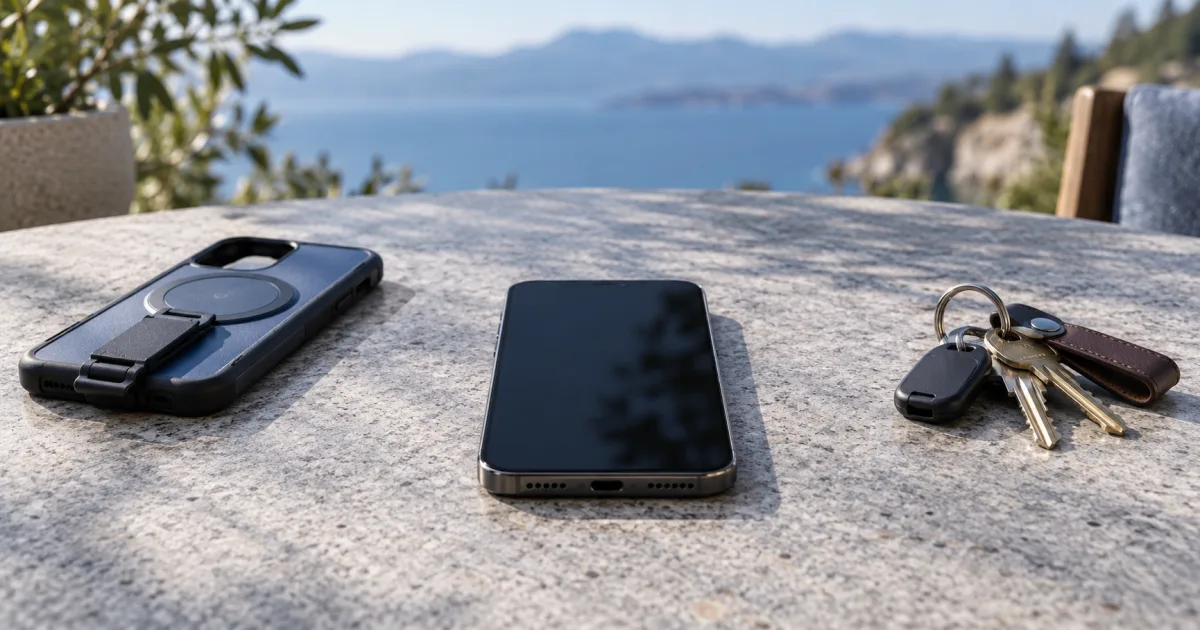
Give the phone some space from magnets, metal fixtures and other electronics. Check removable accessories if you suspect they are affecting the result. Compare the reading after changing your surroundings rather than assuming a case or charger is harmless on every device.
Hold the phone flat and move it steadily. Small changes can appear as jitter; a large discrepancy deserves a check against an independent direction. The page's accuracy estimate, when present, comes from the device and is not a measurement made by Online Compass.
Follow the device's calibration guidance
If the phone or its operating system asks for a calibration motion, follow that instruction. Online Compass illustrates moving away from interference, tracing a figure eight and rotating the device. These are guidance scenes, not an automated calibration routine.
Move gently and keep a secure hold on the phone. Recheck the heading afterwards. A smoother-looking needle is not proof that the direction is correct, and the page does not claim that a completed motion guarantees a particular accuracy.
If a poor report persists, try a different position or supported browser. Some environments or devices may not yield a usable compass reading. Repeatedly moving the phone is not a substitute for a reliable reference.
Compare like with like
Before comparing the phone with a map or another compass, identify each north reference. A magnetic reading and a geographic route bearing can differ because their reference directions differ. Do not diagnose every difference as broken hardware.
The bearing calculator produces an initial geographic bearing on a spherical Earth approximation. The device compass reports its own reference separately. The optional True North mode applies an estimated local WMM2025 declination correction to an explicitly magnetic sensor reading. Set its location first. This changes the north reference, not the accuracy of the sensor.
Confirm freshness and orientation
Rotate the screen, return to the tab and wait for the new sensor state. The page clears old readings while it waits. Test the direction again with the phone flat instead of comparing an old portrait reading with a new landscape position.
If the browser supplies no accuracy estimate, keep that uncertainty visible. If it supplies a poor estimate, treat the warning as a reason to check the result, not as a precise bound verified by this website.
Use a fallback that fits the task
Manual angle mode is useful for learning degrees and cardinal positions. It stays unverified and cannot find north. A coordinate pair can identify a place without describing the direction the phone is facing; Coordinates keeps that distinction visible.
When you need a dependable direction and the phone cannot provide one, use an independent navigation reference and verify it before continuing.